3D Websites for Small Businesses: What They Are and Whether You Need One
For years, 3D on the web meant product configurators for car brands and launch pages for tech companies. It was expensive, heavy, and nothing a café in Lisbon or a salon in Toronto would consider.
That has changed. The tools to render photoreal scenes are free, phones can play smooth image sequences, and browsers can draw live 3D. A small business can now have a website that feels like walking into the place, without it being slow or gimmicky. This guide explains what "3D website" really means, the kinds that work for small businesses, and how to tell whether one is right for you.
In short: a good 3D website takes the one thing customers love about your business, such as your signature dish, your space or your view, and makes visitors feel it in the first few seconds. Everything else (menu, reviews, hours, contact) stays simple and fast.
What counts as a "3D website"?
It's any site where part of the experience is a three-dimensional scene rather than a flat photo. In practice, most small-business 3D falls into four types. You can see all four on the live sites we've built for cafés.
1. The scroll film
A 3D scene is rendered as a sequence of frames, like a short film, and your scroll position chooses the frame. Scroll down and the camera moves; scroll up and it reverses. Because the frames are rendered in advance, they can be fully photoreal with real light, glass and liquid, and phones only have to show images.
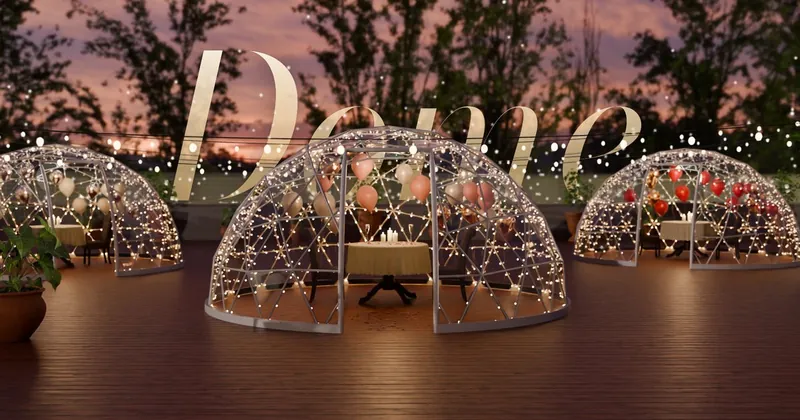
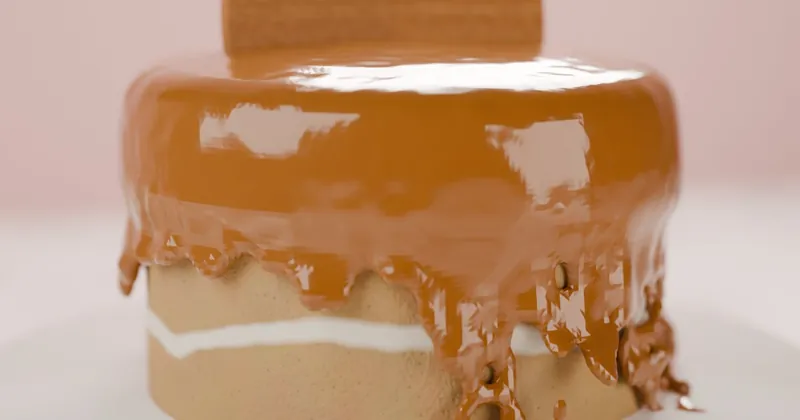
2. The live 3D scene
The scene is drawn in real time by the browser, so it can react to anything: time, the cursor, a tap. It's the most interactive kind, and it needs the most care to stay smooth on cheaper phones.
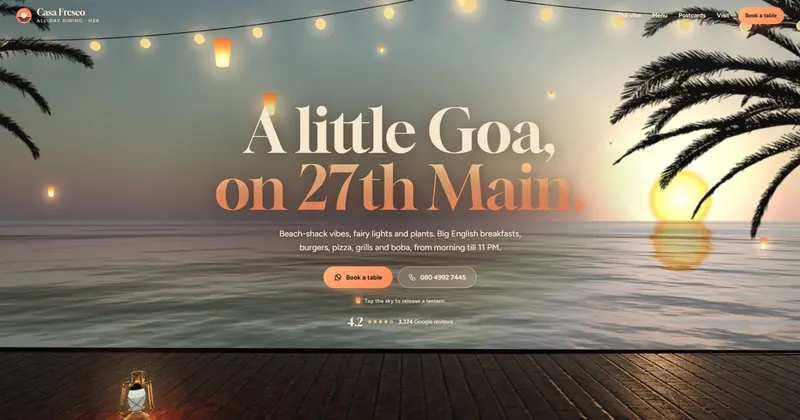
3. The depth scene
A rendered still is rebuilt as a 3D surface, so the view shifts in true perspective when you move the cursor or tilt your phone. It feels like looking through a window, at a fraction of the cost of a full live scene.
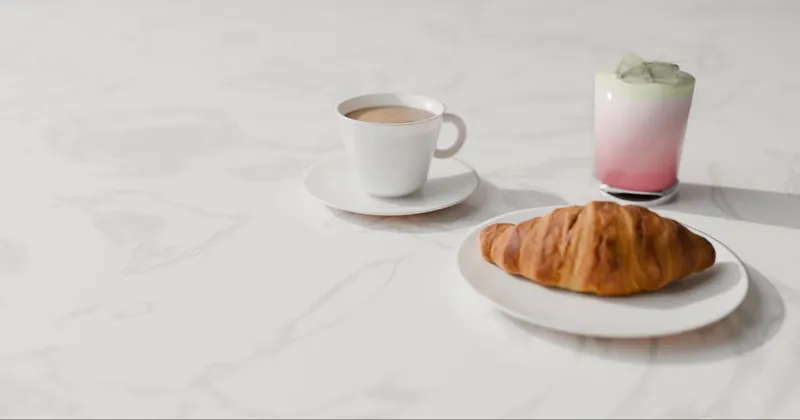
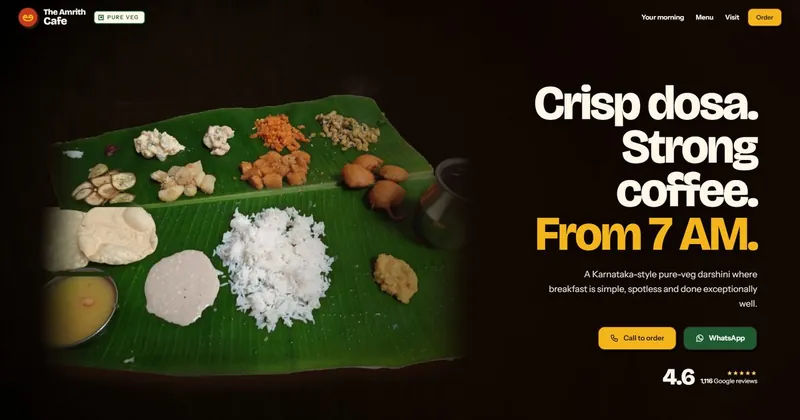
4. The layered real photo
A real photograph is cut into layers, each of which can move, cast shadows or be explained. It suits businesses whose real product is the star.
Why 3D can work for a local business
- It's memorable. Most local sites look alike. A visitor comparing four cafés remembers the one where the cake poured.
- It sells the experience, not just the menu. People choose a rooftop, a garden or a book café for how it feels. 3D can show that better than a photo grid.
- It gets shared. Owners send the link to regulars, and customers send it to friends planning a night out.
- It signals care. A site that clearly took effort suggests the food, service or treatment does too.
When 3D doesn't help
Be honest about these, because they're where 3D sites usually go wrong:
- 3D that has nothing to do with the business. A spinning abstract shape on a plumber's site adds load time and nothing else. The 3D should show your product, place or experience.
- 3D that blocks the basics. If visitors have to watch an intro before finding your phone number or hours, you've lost them. Contact buttons and the menu should never wait for the 3D.
- 3D that's slow on real phones. Test on a mid-range phone over mobile data. We cover how to keep it fast in do 3D websites slow down phones?
- 3D with no fallback. Some visitors turn on reduced motion or data saver. They should get beautiful still images, not a broken page.
What does a 3D website cost?
| Option | Typical cost | What you get |
|---|---|---|
| Template with a 3D effect | Low | Generic 3D that isn't about your business |
| Freelancer or agency, custom 3D | Usually high, as it needs modelling, rendering and performance work | Custom scenes; quality varies a lot |
| GrabNear free website | Free | A one-off 3D site built around your business, with menu, reviews, hours and one-tap contact |
Is a 3D website right for you? A quick test
A 3D site is a strong fit if you can answer "yes" to at least two of these:
- Customers often photograph or talk about one specific thing: a dish, a room, a view, a ritual.
- People choose you for the experience, not only the price.
- You compete with nearby businesses that look similar online.
- Your customers share links with each other when planning to visit.
Cafés, restaurants, bakeries, rooftop venues, salons and spas, boutique stays, studios and gift shops usually tick several boxes.
Get a 3D website for your business, free
We'll find your signature moment from your Google listing and reviews, and build the site around it. You see a private preview first.
Request a free website →Frequently Asked Questions
Related: Website showcase · Café website design ideas · How we build our free 3D websites