Hyper-Local Lead Generation: How to Dominate Your City or Neighborhood
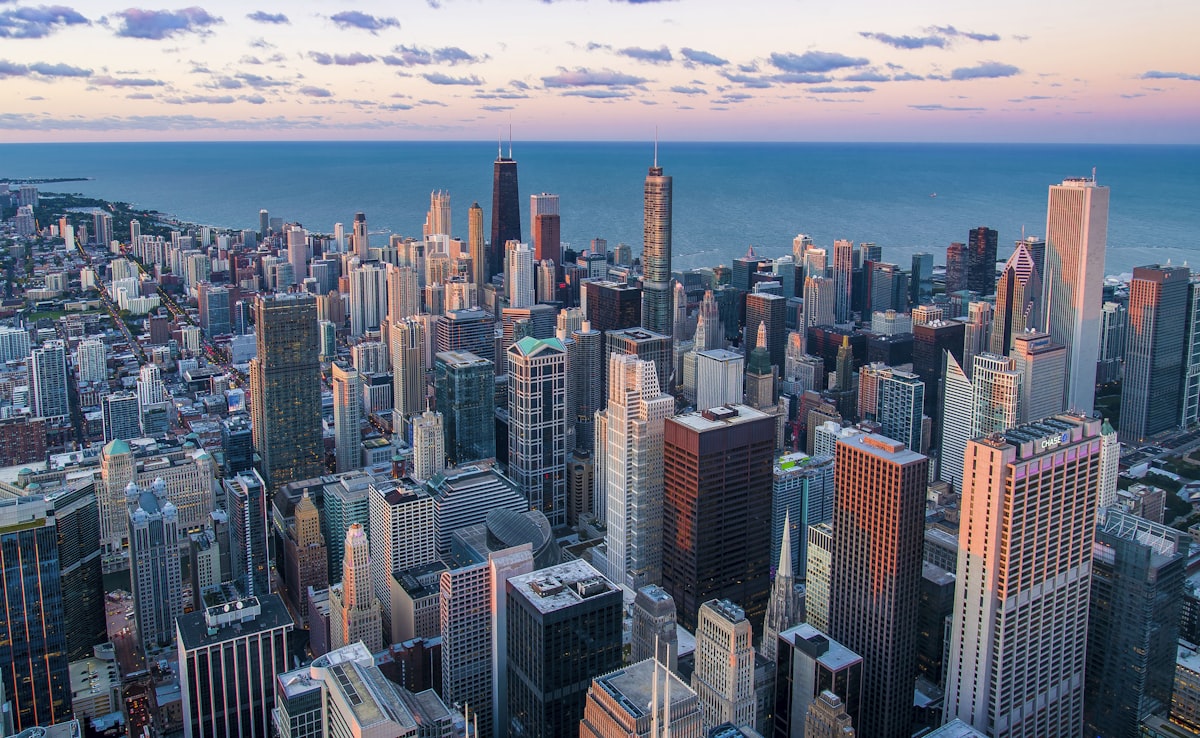
Most small businesses waste money running ads that reach people three cities away who will never walk through their door. National campaigns built for brand awareness are the wrong tool when your actual market is a five-kilometer radius. The businesses that consistently outperform their competitors on lead quality — not just lead volume — are the ones that understand a simple truth: proximity is the most powerful purchase signal that exists.
A plumber in Chicago does not need a lead from Dallas. A dental clinic in Manchester does not need website traffic from Edinburgh. Yet the default digital marketing playbook keeps pushing broad targeting, broad keywords, and broad ad spend because that is what agencies are built to sell. This guide is about rejecting that approach entirely and replacing it with a hyper-local strategy that fills your pipeline with people who can actually buy from you.
Why Hyper-Local Beats National for Most Businesses
The data is unambiguous. According to Google's own research, 46% of all searches on the platform carry local intent — people typing "near me," a city name, or a neighborhood reference directly into their query. That number has grown by more than 200% over the past five years, driven almost entirely by mobile device usage. When someone searches for a service on their phone, they are usually within a short drive of where they want to go and ready to act within hours, not weeks.
National campaigns reach a broad audience but convert poorly at the local level because the messaging cannot be specific enough to trigger immediate action. A plumbing ad that says "Fast, Reliable Plumbers" competes with every other plumber in the country. A plumbing ad that says "Emergency Drain Clearing in Brooklyn — Arrive in 45 Minutes" converts at a dramatically higher rate because it speaks directly to a person who has a specific problem in a specific place right now.
The conversion rate difference is not marginal. WordStream's analysis of service-area businesses found that hyper-local campaigns — those targeting a radius of 10 miles or less with location-specific ad copy — generated leads at a cost 61% lower than equivalent national campaigns, while closing at rates 2.8 times higher. That is not a rounding error. That is the difference between a profitable marketing budget and a money pit.
The core insight: Broad targeting optimizes for impressions. Hyper-local targeting optimizes for buyers. These are fundamentally different goals, and only one of them pays rent.
Step 1 — Own Your Google Business Profile Before Anything Else
Before you run a single ad or publish a single piece of content, your Google Business Profile (GBP) needs to be treated as a primary revenue asset, not an afterthought. This is the single highest-leverage action a local business can take, and the majority of businesses still have incomplete, outdated, or unoptimized profiles.
Google Maps shows 87% of people the local businesses they end up visiting.
BrightLocal's annual Local Consumer Review Survey found that 87% of consumers use Google Maps to evaluate local businesses before visiting. That single platform has more influence over local purchase decisions than Facebook, Instagram, Yelp, and Nextdoor combined. If your GBP is not fully optimized, you are effectively invisible at the moment of highest buyer intent.
Fill in your business category, service areas, hours, phone number, website, and a complete description that includes your primary service keywords naturally. Businesses with complete profiles receive 7 times more clicks than those with incomplete ones, according to Google's own published data.
Google Posts appear directly in search results and signal to the algorithm that your business is active. Post about promotions, seasonal services, new team members, or local events. Businesses that post weekly see a 32% increase in profile views compared to those that post monthly or not at all.
Reviews are the single strongest ranking factor in the Google local pack. A business with 200 reviews at 4.4 stars will outrank a business with 20 reviews at 5.0 stars in most competitive markets. Send a review request via SMS within two hours of every completed job — conversion rates for SMS review requests are 6 to 8 times higher than email.
Profiles with more than 100 photos receive 1,065% more website clicks and 1,038% more direction requests than profiles with fewer than 10, according to Google's published benchmarks. Document your work, your team, your vehicle fleet, and your service area. Real photos convert better than stock imagery every time.
Step 2 — Build Neighborhood-Level Landing Pages That Actually Rank
If your service area covers multiple neighborhoods, suburbs, or districts, you need a dedicated landing page for each one. This is not about spinning up thin duplicate pages — it is about creating genuinely useful, location-specific content that gives a resident in that area a reason to choose you over someone from across town.
A plumber serving the greater Atlanta metro area should have separate pages for Buckhead, Decatur, Midtown, Sandy Springs, and Marietta — not one page that says "we serve all of Atlanta." Each neighborhood page should include the name of the area in the page title, H1, meta description, and URL. It should reference local landmarks, building ages, common plumbing issues specific to that area's housing stock, and testimonials from customers in that neighborhood.
Moz's Local Search Ranking Factors study consistently finds that on-page signals — including proximity of the business address to the searcher, city or neighborhood keyword relevance in the content, and the presence of local schema markup — account for roughly 14% of total local pack ranking factors. That is enough to push you from position 5 to position 1 in competitive markets where everyone else has a generic service page.
The technical side matters too. Every neighborhood page should have LocalBusiness schema markup embedded in the HTML, listing your NAP (Name, Address, Phone) exactly as it appears on your GBP. Inconsistencies between your website, GBP, and directory listings — even minor ones like "St." versus "Street" — suppress your local rankings. Audit every citation source at least twice a year using a tool like Moz Local or BrightLocal to catch drift before it costs you rankings.
Step 3 — Run Geo-Fenced Paid Campaigns with Radius Precision
Once your organic foundation is solid, paid local campaigns can amplify results dramatically — but only if you abandon the default broad targeting settings that most platforms default to. Google Ads, Meta, and programmatic display networks all allow radius-based geo-targeting that most advertisers never fully exploit.
For Google Local Service Ads (LSAs), your targeting is already tied to your service area — but your bid strategy needs to prioritize the ZIP codes or postal districts where your margins are highest. If your team is based in the north of the city and a lead comes from the south, your drive time eats into your profit. Use bid adjustments to increase bids in your core zones and decrease them at the edges of your service area.
For Meta campaigns, use the "drop a pin" radius feature rather than city-level targeting. Set your radius to 8 to 15 kilometers around your business address, or around the neighborhoods you serve. Then layer in behavioral targeting for homeownership status, income bracket, and life events like "recently moved" — which is one of the highest-intent signals for services like cleaning, renovation, landscaping, and security systems. People who have just moved into a new home buy more local services in the first 90 days than in the following three years combined.
Programmatic geo-fencing takes this further. Platforms like GroundTruth and Simpli.fi allow you to draw a fence around a competitor's location and serve ads to people who physically enter that space. If a prospective customer visits a competing HVAC showroom, you can serve them a comparison ad on their phone within minutes of them leaving. This sounds aggressive, but it is legal, widely used, and produces remarkably high-quality leads because you are targeting people who have already demonstrated they are actively shopping for your category.
Step 4 — Activate Community and Offline Channels That Digital Misses

Local events and community sponsorships build trust that no digital ad can replicate.
Digital-only local marketing leaves a significant portion of high-quality leads on the table. The businesses that truly dominate a neighborhood do it by combining online visibility with offline presence in a way that builds the one thing no algorithm can manufacture: genuine community trust.
Sponsoring a local youth sports team costs between $500 and $2,000 per season in most markets. In return, your logo appears on uniforms, at the field, in the league program, and in dozens of social media posts from parents who are exactly the demographic buying home services, insurance, and professional services. The cost per impression is a fraction of digital advertising, and the credibility transfer is something no banner ad can replicate. A study by the Event Marketing Institute found that 74% of consumers say participating in a branded local event makes them more likely to buy from that brand.
Nextdoor is the most underused platform in local marketing. It is a neighborhood-by-neighborhood social network where residents actively ask for service recommendations. A business that maintains an active presence on Nextdoor — responding to recommendation requests, sharing useful local content, and running neighborhood-targeted ads — has a direct line to the highest-intent local buyers on the internet. Nextdoor's own data shows that recommendations on the platform are the number one driver of first-time purchases from local businesses among its user base.
Direct mail is experiencing a quiet renaissance among savvy local marketers precisely because everyone else abandoned it for digital. USPS Every Door Direct Mail (EDDM) allows you to target every household on a specific postal route for roughly $0.20 per piece. A well-designed postcard with a strong local offer and a QR code tracking link can generate a 3 to 5% response rate in established neighborhoods — a number that would be extraordinary in email marketing and essentially impossible in cold outbound digital.
Step 5 — Measure What Actually Matters in Local Lead Generation
The metrics that matter for hyper-local campaigns are fundamentally different from those that matter in national digital marketing. Impressions are irrelevant. Click-through rate is a secondary metric. The numbers you need to track obsessively are cost per qualified local lead, booked appointment rate, show rate, and closed revenue per lead source.
Set up call tracking numbers for every channel — your GBP, your website, your direct mail, your LSAs — so you know exactly which sources are driving phone calls. Use a tool like CallRail or WhatConverts to record and log calls by source. Review at least 20% of calls manually each month to assess lead quality, not just lead volume. A channel that drives 50 calls but only 8 bookings is underperforming a channel that drives 20 calls with 14 bookings, even though it looks better on a raw volume dashboard.
Tools like GrabNear can help here by surfacing local leads from relevant platforms and tracking where each lead originated, so you can make informed decisions about where to concentrate your budget — rather than defaulting to the channel that looks busiest.
Set a monthly review cadence where you look at your GBP insights (search queries, direction requests, phone calls), your paid campaign performance by ZIP code or postal district, and your organic ranking for your top 10 neighborhood-specific keywords. Local search is dynamic — a competitor can open nearby, a new development can shift population density, or an algorithm update can reshuffle rankings. Businesses that review monthly catch these shifts early. Those that review quarterly find out when revenue has already dropped.
The compounding advantage: Every Google review you collect, every neighborhood page you build, and every local citation you earn compounds over time. A hyper-local strategy built consistently for 18 months creates a moat that a new competitor with a big ad budget cannot easily breach. National campaigns stop working the moment you stop paying. Local authority keeps delivering leads long after the work is done.
Building Your Hyper-Local Lead Engine: The 90-Day Action Plan
Most businesses fail at local lead generation not because the strategy is wrong but because they try to do everything at once and sustain nothing. A phased approach delivers compounding results without burning out your team.
Complete your GBP profile. Audit all citations for NAP consistency. Set up call tracking. Identify the five neighborhoods where your best customers come from. Build or rewrite landing pages for each of those neighborhoods with local schema markup. Set up a review request workflow for every completed job.
Launch Google LSAs if you qualify for your category. Set up a radius-targeted Meta campaign with neighborhood-specific creative. Claim your Nextdoor Business Page and begin engaging with recommendation requests. Identify one local sponsorship opportunity — a sports team, a community event, or a school fundraiser — and commit to it.
Review call tracking data by source. Identify which ZIP codes or postal routes are generating the highest-quality leads and increase bids or direct mail volume in those areas. Cut spend in areas with high call volume but low booking rates. Begin building a content calendar of weekly GBP posts and monthly neighborhood-focused blog articles to strengthen organic authority.
By the end of 90 days, you will have a functioning local lead engine with clear data on which channels pay and which ones cost money without return. From that point, the strategy is simple: systematically redirect budget toward what works and keep building the organic assets that compound over time.
Start Generating Local Leads Today
GrabNear helps local businesses find and capture high-intent leads from their service area — without wasting budget on people who can never buy from them. Set up your account in minutes and see qualified local leads the same day.
Try GrabNear Free