How AI-Powered Lead Research Changes Your Sales Workflow

The average sales representative spends 40% of their working week on research tasks — gathering background on companies, reading LinkedIn profiles, skimming news articles — before making a single outreach attempt. That is roughly 16 hours every week spent on work that does not directly produce revenue. For a team of ten reps, that is 160 hours of lost selling time, every single week.
AI-powered lead research is changing that calculation fundamentally. Not by removing the need for research — thorough preparation still wins deals — but by compressing the time it takes to go from a raw lead to a fully contextualized prospect that a rep can approach with confidence and specificity.
In 2026, the most effective sales teams are not those with the largest headcount. They are the ones that have embedded AI research capabilities directly into their lead management workflow, giving each rep access to intelligent analysis on demand, linked to each individual lead in their pipeline.
The Problem with Manual Lead Research
Manual research is not just slow — it is inconsistent. Different reps approach it differently: some spend 30 minutes on every lead, others five minutes. Some check company news, others skip it. Some verify contact details, others reach out on stale data. The result is a team where lead quality is wildly variable depending on which rep is working it, not on the quality of the underlying prospect.
There is also a context-switching cost that is easy to underestimate. Pulling up a browser tab, searching the company name, reading a LinkedIn page, checking a review site, returning to your CRM — this fragmented process interrupts the flow state that makes sales work productive. Reps who do it well tend to do it instead of making calls. Reps who prioritize calls tend to skip the research.
AI research eliminates the choice. When intelligence about a lead is generated automatically and attached directly to that lead in your pipeline, preparation and outreach are no longer competing activities.
Key insight: The gap between a prepared and unprepared sales call is not measured in seconds — it is measured in conversion rates. Research from RAIN Group found that top-performing reps were 2.7 times more likely to have conducted thorough pre-call research than average performers. The barrier has always been time. AI removes that barrier.
How Per-Lead AI Chat Research Works
Modern lead management platforms now embed AI chat interfaces directly within individual lead records. Rather than navigating to a separate research tool, reps open a lead, see all the contact and business data that has been collected, and have an AI assistant available in the same interface — contextually aware of who this company is.
The interaction is conversational and specific. A rep working a lead for a mid-sized logistics company can ask: "What are the biggest supply chain challenges for companies of this size?" or "What questions should I ask their operations director to uncover pain around last-mile delivery?" The AI responds with actionable, contextualized analysis — not generic search results.
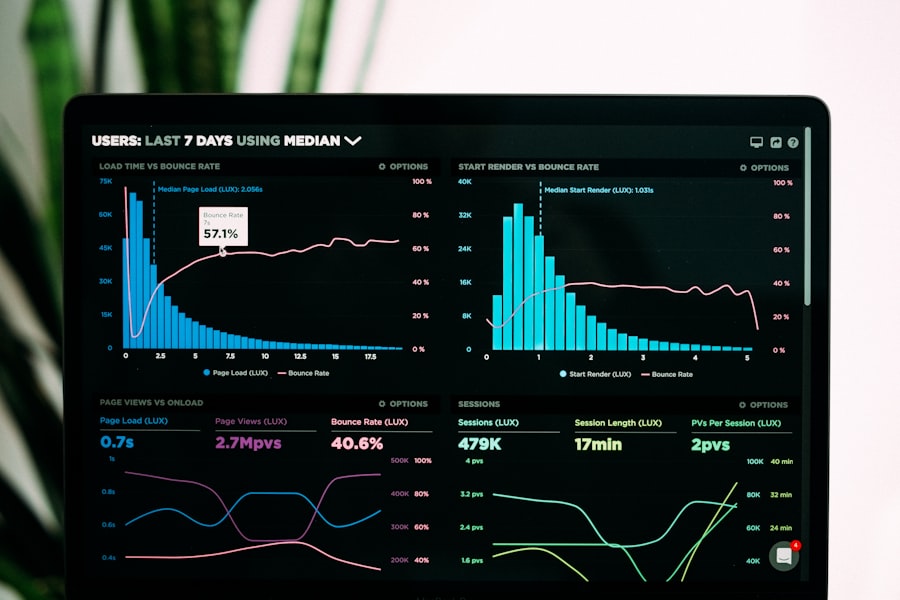
AI research interfaces embedded in lead records let reps get answers without switching context.
What makes this approach powerful is the combination of structured lead data — business category, location, rating, contact details — with the AI's ability to synthesize broader industry knowledge. The AI knows who this company is from the collected data. The rep's questions add the sales lens. The result is research that is both specific and fast.
When a rep opens a lead record, the AI assistant is automatically activated and loaded with the company's profile: name, category, location, rating, contact information, and any data collected from their business listing. No manual input is required to get the AI oriented.
The rep asks industry-specific or company-specific questions in natural language. The AI draws on its training data plus the loaded company context to generate specific, relevant responses — covering industry challenges, typical buyer personas, objection handling strategies, and conversation hooks.
The entire research conversation is stored and linked to that specific lead. When the rep returns to this lead — or when another team member picks it up — the previous research session is available. Nothing is lost between sessions, and no one has to start from scratch.
Armed with AI-generated context, the rep initiates outreach — via WhatsApp, phone, or email — with specific talking points, relevant questions, and an understanding of the prospect's likely concerns. The first conversation is noticeably more prepared than anything achievable through manual research in the same time window.
The Persistent Chat History Advantage
One of the most underappreciated features of lead-linked AI research is the persistence of conversation history. Traditional research leaves no trace: a rep Googles a company, reads some articles, and closes the tab. That knowledge lives only in their head — and it evaporates when the rep moves to a different lead, takes a day off, or leaves the team.
When AI research is attached to a lead record and stored permanently, the dynamic changes entirely. A rep who researched a hospitality company two weeks ago and is now following up for the third time can review the entire research thread from their first session — the questions they asked, the context the AI provided, the specific angles they planned to use. They pick up the conversation at full depth, not from zero.
This is especially powerful for longer sales cycles. Enterprise deals that take three to six months to close involve multiple touchpoints, sometimes handled by different people on the same team. AI-linked lead research creates an institutional memory that outlasts any individual rep's involvement.
What Effective AI Lead Research Looks Like in Practice
The reps who use AI lead research most effectively tend to ask questions in a specific category:
- Industry context questions: "What are the biggest operational challenges for independent restaurants in 2026?" gives the rep an industry-informed conversation framework.
- Company-specific questions: "What does a high Google rating mean for a dental practice's patient acquisition strategy?" links the specific data in the lead to business implications.
- Objection preparation: "What objections am I likely to face when selling CRM software to a two-person real estate agency?" lets the rep prepare responses before they hear the pushback.
- Conversation hooks: "What are three things I could reference in an opening WhatsApp message to a local gym owner that would feel relevant and not generic?" converts research into specific, usable copy.
The pattern is clear: reps who ask specific, scenario-rich questions get disproportionately better output than those who ask generic ones. The quality of the research mirrors the quality of the question — which is also true of human research, but AI makes the feedback loop immediate enough that reps can iterate on their questions in real time and arrive at exactly the angle they need.

Effective AI research is driven by specific, scenario-based questions that produce actionable output.
Integrating AI Research into a Team Sales Process
Moving AI research from a tool individual reps use to a team-wide standard requires a few structural changes. The technology is the easy part. The process shift is what determines whether you see consistent results or inconsistent adoption.
The most successful teams treat AI research as a required step in the lead qualification process — not optional preparation, but a mandatory checkpoint before any lead moves from "identified" to "contacted." This creates accountability and ensures that the quality advantage AI provides is realized consistently across the whole team.
Some teams formalize this with a minimum research standard: before a lead can be moved to "outreach," there must be at least one saved AI research session attached to it, with questions covering industry context, typical pain points, and a proposed outreach angle. This takes roughly five minutes per lead and ensures that every rep, regardless of experience level, is making first contact with genuine preparation.
Implementation tip: Start with your highest-value leads — the ones where a successful first call has the highest revenue impact. Apply AI research to those first, measure the difference in conversion rates versus your historical baseline, and use those results to build the case for broader adoption across the team.
The Compounding Return: Research Quality Improves Over Time
One of the less obvious benefits of AI-linked lead research is that it generates organizational learning as a byproduct. When research conversations are attached to leads and those leads are eventually won or lost, you accumulate a dataset of what research angles, questions, and prep strategies correlated with positive outcomes.
Teams that review their won and lost deals against the quality and content of associated AI research sessions start to identify patterns: what types of questions produced the most useful prep, which industries benefited most from AI context, which objection frameworks were most predictive of successful closes. This turns AI research from a productivity tool into a learning system — one that improves the team's overall approach to qualification over time.
Research Every Lead Intelligently with GrabNear
GrabNear gives every lead its own AI research assistant — contextually aware, always available, and permanently attached to the lead record. Stop starting from scratch. Build research that compounds.
Start for Free